

Hearing damage is one of the most common injuries linked to service in the UK Armed Forces — and one of the most under-claimed. Years of exposure to gunfire, explosions, aircraft engines, and heavy machinery leaves a lasting mark on hearing that many veterans simply learn to live with, without realising it may be compensatable.
If your hearing loss developed or worsened because of your time in service, you may be entitled to make a claim, regardless of how long ago you left the Armed Forces. Many of the veterans we work with served 20 or more years ago and are only finding out now that a claim is possible.
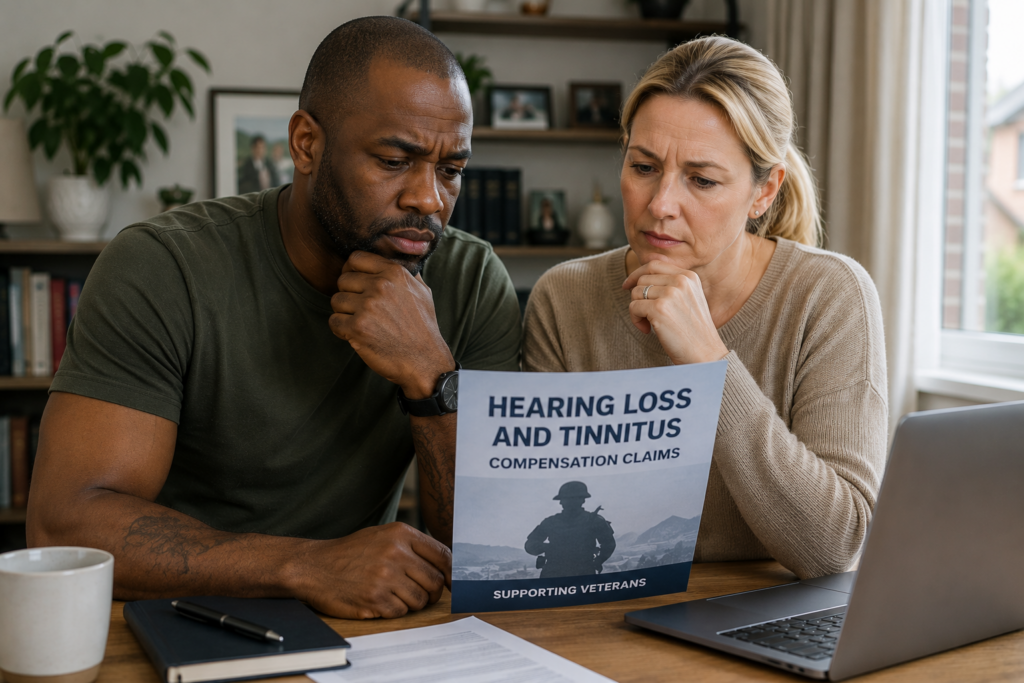
What Counts as Noise-Induced Hearing Loss?
Noise-induced hearing loss (NIHL) is damage to the inner ear caused by prolonged or repeated exposure to loud noise during military service. Unlike a sudden injury, hearing damage often develops gradually, making it easy to overlook until everyday conversations become difficult.
The most common causes include:
- Weapons fire — rifles, pistols, heavy artillery and mortar rounds.
- Explosions — combat explosions, controlled detonations and breaching charges.
- Aircraft engines — common among RAF personnel and Royal Navy flight deck crews.
- Heavy machinery — tanks, armoured vehicles and engineering equipment.
- Engine room noise — prolonged exposure aboard naval vessels.
If you served in any of these environments and now experience hearing loss, ringing in your ears (tinnitus), or difficulty following conversations in noisy places, your condition may be linked to your military service.
Important Note
Military hearing loss often develops gradually. Many veterans don’t recognise the symptoms until years after leaving the Armed Forces, which is why thousands never realise they may be entitled to claim compensation.
Do You Need to Still Be Serving?
No. You can claim whether you left the Armed Forces recently or decades ago, provided your hearing loss is connected to your military service and you’re within the relevant legal time limits.
Many veterans assume they have missed their opportunity because years have passed since leaving service. In reality, many successful claims are made long after discharge because hearing damage often becomes more noticeable over time.
Key Point: You do not need to still be serving, and you do not need to have been diagnosed during your military career. What matters is whether your hearing condition can be linked to your service.
What’s the Process?
The claims process is designed to be straightforward and supportive. Every case is different, but it generally follows these four simple stages.
Step 1 — Eligibility Check
Complete a short online eligibility check about your military service, hearing symptoms and current circumstances. It only takes a minute and helps determine whether your case may qualify.
Step 2 — Free Case Review
A veteran advisor will review your information, discuss your circumstances and explain the next steps. There is no obligation to proceed if you decide not to continue.
Step 3 — Free Hearing Assessment
Where appropriate, you’ll be referred for a free hearing assessment with an independent audiologist. This medical evidence helps support your claim and provides a clear understanding of your hearing condition.
Step 4 — Solicitor Support
If your claim proceeds, it will be managed by a specialist solicitor partner on a No Win, No Fee basis. They’ll guide you through every stage of the legal process while keeping you informed along the way.
What Could You Receive?
Compensation depends on the severity of your hearing loss, any associated tinnitus, and the medical evidence supporting your claim. Every case is assessed individually, so it’s not possible to provide an exact figure without reviewing your personal circumstances.
Your free case review allows our advisors to explain the process, discuss your eligibility and outline the evidence that may be required before any legal action begins.
Good to Know
No reputable claims company can promise a specific compensation amount before reviewing your individual case. Every claim is unique and depends on the available medical and service evidence.
Common Questions
Can I claim if I left the Armed Forces many years ago?
Yes. Many successful claims are made years after leaving military service because hearing damage often develops gradually and may not become obvious until later in life.
Can tinnitus be included in my claim?
Yes. Tinnitus commonly occurs alongside noise-induced hearing loss and may also form part of your compensation claim if it is linked to your military service.
Will making a claim affect my military pension?
In most cases, pursuing a hearing loss claim does not affect your military pension or existing service benefits.
Does it cost anything to check my eligibility?
No. Your initial eligibility check and case review are completely free, with no obligation to proceed.
What Should You Do Next?
If you’ve noticed hearing loss, ringing in your ears, or difficulty following conversations in noisy environments, it costs nothing to find out where you stand. Our free eligibility check takes less than a minute to complete, and there’s absolutely no obligation to continue.
Start your free eligibility check today and let our experienced team help you understand your options. Check Now →
This article is provided for general information only and should not be considered legal advice. Every claim depends on its own facts, supporting evidence and applicable legal time limits.