

Non-Freezing Cold Injury (NFCI) is one of the least recognised service-related conditions affecting UK veterans. Unlike frostbite, NFCI develops without the skin freezing, yet it can leave lasting damage to the nerves and blood vessels, causing symptoms that may persist for years after military service.
Many veterans who trained or served in cold, wet environments simply accepted ongoing pain or sensitivity as part of military life. As a result, countless former service personnel never realise that NFCI is a recognised condition that may form the basis of a compensation claim.
What Is Non-Freezing Cold Injury (NFCI)?
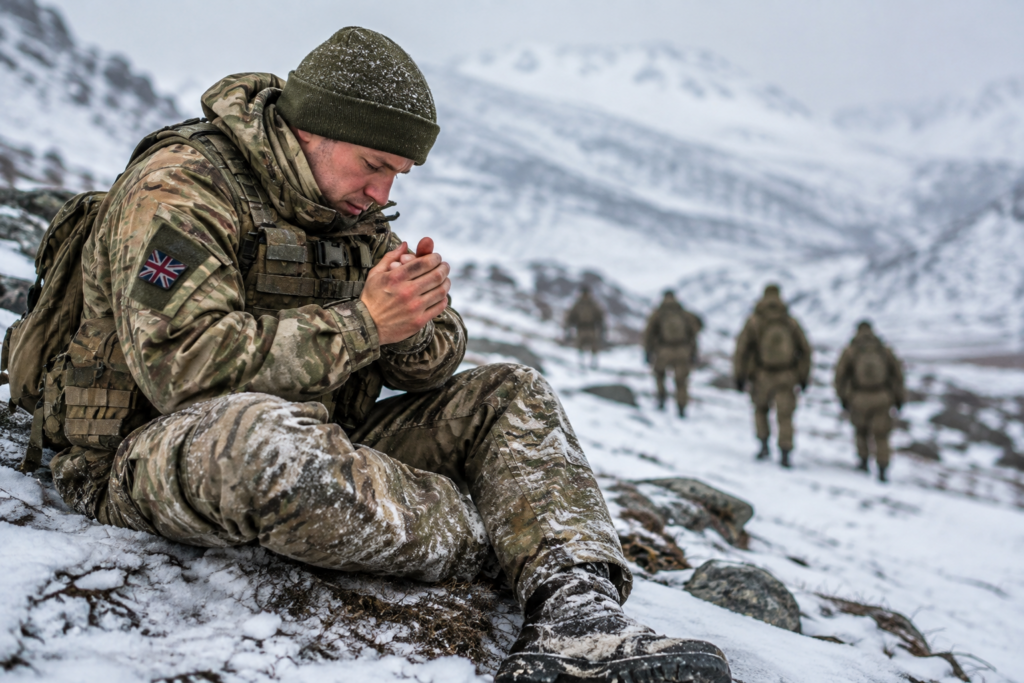
Non-Freezing Cold Injury occurs when parts of the body are exposed to cold, damp conditions for prolonged periods without actually freezing. The condition most commonly affects the hands and feet, although the ears and nose may also be impacted.
Unlike frostbite, the damage isn’t caused by frozen tissue. Instead, repeated exposure to cold and wet environments can affect the nerves, blood vessels and surrounding tissues, resulting in symptoms that may become permanent.
How Does NFCI Happen?
NFCI is commonly associated with military training and operational deployments where personnel spend extended periods in harsh weather conditions.
- Extended field exercises in cold, wet environments.
- Cold-weather deployments where temperatures remain low for prolonged periods.
- Training exercises in locations such as Scotland, Norway and the Brecon Beacons.
- Prolonged exposure while wearing wet boots, gloves or clothing.

Common Symptoms of NFCI
Symptoms can vary from person to person, but many veterans continue to experience problems long after their military service has ended.
- Persistent pain in the hands or feet.
- Numbness or tingling sensations.
- Extreme sensitivity to cold.
- Reduced circulation.
- Symptoms that become worse during colder weather.
Key Point: Many veterans live with NFCI symptoms for years without realising they may be linked to military training or deployment.
Why Is NFCI Often Under-Claimed?
Unlike visible injuries, NFCI doesn’t usually leave obvious physical scars. Instead, the condition often presents as ongoing nerve pain, cold sensitivity or circulation problems that many veterans simply learn to live with.
Because symptoms can continue for many years, it’s easy to forget they began during military service. As a result, many veterans never realise NFCI is a recognised service-related condition that could be eligible for compensation.
Could You Be Eligible to Claim?
If you’ve experienced ongoing pain, numbness or unusual sensitivity to cold since military training or deployment, it’s worth exploring whether your symptoms could be linked to Non-Freezing Cold Injury.
A free eligibility check takes less than a minute and allows an experienced advisor to assess your circumstances without any obligation to proceed.
Common Questions
Is NFCI the same as frostbite?
No. Frostbite involves tissue freezing, whereas NFCI develops after prolonged exposure to cold and wet conditions without freezing.
Can NFCI affect me years after leaving the Armed Forces?
Yes. Many veterans continue to experience symptoms for years, particularly during colder weather.
Does checking my eligibility cost anything?
No. Your eligibility check and initial case review are completely free and there’s no obligation to proceed.
What Should You Do Next?
If your hands, feet or other affected areas have never felt quite the same since serving in cold conditions, don’t assume it’s simply something you have to live with. A quick eligibility check could help you understand whether you may have a valid compensation claim.
Start your free eligibility check today and let our experienced team help you understand your options. Check Now →
This article is provided for general information only and should not be considered legal advice. Every claim depends on its own facts, supporting evidence and the applicable legal considerations.